
If you are looking for solid business analysis resources to use right now, not a reading list to bookmark and forget, the six tools below are worth your time. I have pointed early-career BAs toward these resources from Bridging the Gap for years, and the ones who actually work through them come back with sharper questions and more confidence in their day-to-day practice. Each resource below is free to access. I will tell you what each one is genuinely useful for, where it fits in real project work, and where I have seen people get the most value from it.
Before you dive in, it is worth being honest about one thing: free resources only work if you use them in context. I have seen analysts download templates and assessments and then leave them sitting in a folder. The difference between those analysts and the ones who actually develop is that the latter group take a resource and immediately apply it to something live in front of them. Keep that in mind as you go through what follows. If you want a broader view of how to structure your own development, the article on business analyst core skills is a useful companion to this one.
The Six Resources at a Glance
| Resource | Best Used When | Primary Output |
|---|---|---|
| BA Skills Assessment | You are unsure where to focus your development | A clear picture of your technique and process gaps |
| Requirements Discovery Checklist | You are preparing for a stakeholder session | A structured set of questions to guide elicitation |
| Business Process Template | You are scoping a new project or process change | A documented current-state or future-state process view |
| Use Case Template | You need to capture software requirements with stakeholders | A use case document that non-technical stakeholders can validate |
| Job Interview Prep Guide | You have a BA interview coming up | Structured preparation for common BA interview formats |
| Quick Start Workshop | You are new to the field or considering the BA career path | A grounded orientation to BA opportunities and approaches |
1. BA Skills Assessment
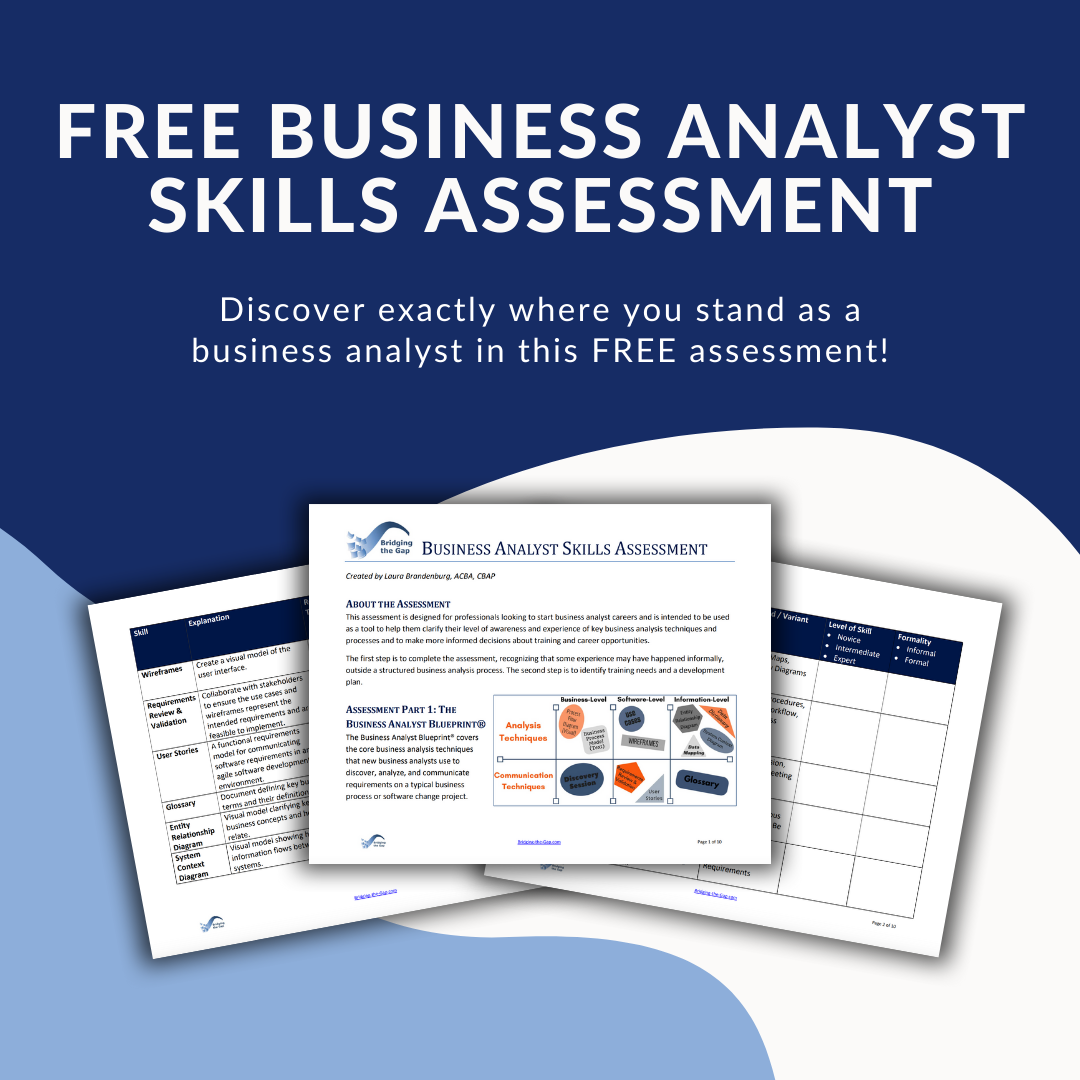
This is the resource I recommend first to anyone who asks me how to figure out where to focus their learning. The Bridging the Gap BA Skills Assessment walks you through key business analysis techniques and processes and asks you to rate your awareness and experience against each one. The output is not a score to boast about. It is a gap map.
- Use it before you plan any training: Without this step, most analysts spend money and time on courses that cover things they already know reasonably well, while their actual gaps go unaddressed.
- Revisit it every six to twelve months: The assessment is most powerful as a tracking tool, not a one-off exercise. Where you were a year ago versus where you are now tells you a great deal about the quality of your learning.
- Be honest in your self-rating: The temptation is to rate yourself higher than your real experience warrants. Resist it. An inflated score helps nobody, least of all you.
I completed a similar self-assessment exercise early in my career and was genuinely surprised to find that I rated myself very low on use case development despite having been involved in several software projects. I had been present in those projects, but I had not actually been doing the BA work. That distinction matters. The assessment helped me name what I was missing and gave me a target.
2. Requirements Discovery Checklist
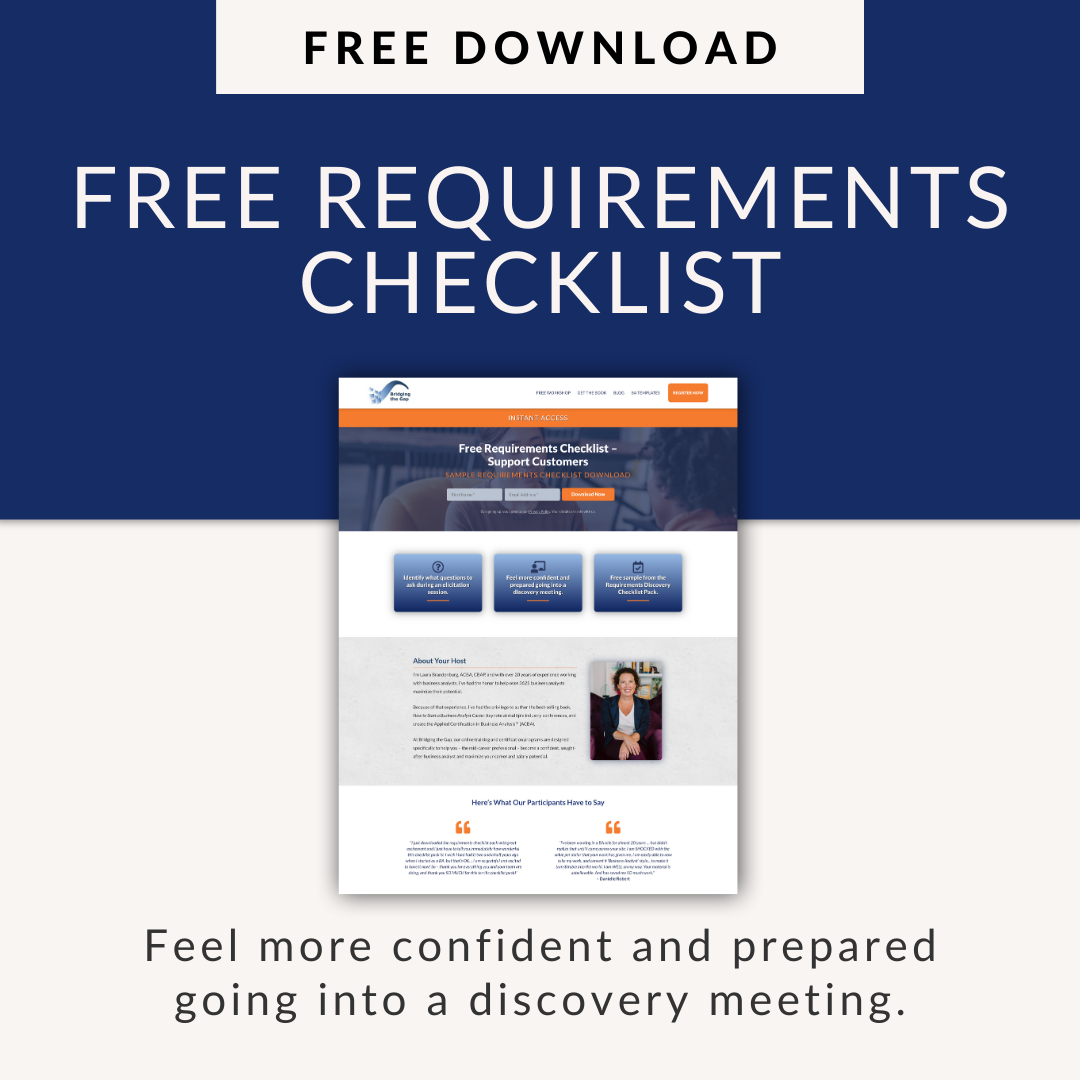
The Requirements Discovery Checklist is designed to help you think through the questions you need to ask when supporting a customer or stakeholder through a requirements engagement. In practice, it functions as a pre-session preparation tool. You work through it before a workshop or interview, not during one.
On a project I worked on with Organisation B, a mid-sized local authority, I was brought in to support a new case management system procurement. The internal project manager had already run a handful of stakeholder sessions before I arrived, and when I reviewed the notes, it was clear that the sessions had gathered opinions but not requirements. Nobody had asked the right scoping questions. When I introduced a checklist-based approach to the next round of sessions, the head of service pushed back immediately. She felt that we were “going over old ground” and that the sessions were adding delay rather than value.
I had to make a specific case for why the questions we had not yet asked were the ones that would protect the project from scope creep later. That conversation was uncomfortable, but it was necessary. The checklist gave me the structure to show exactly which areas were uncovered. We ran two more targeted sessions, and three significant requirements gaps were surfaced that had not appeared in the earlier work. This is the kind of thing a good checklist protects you against. For more on how to structure elicitation conversations, the article on requirements elicitation questions goes deeper on the questioning side.
3. Business Process Template
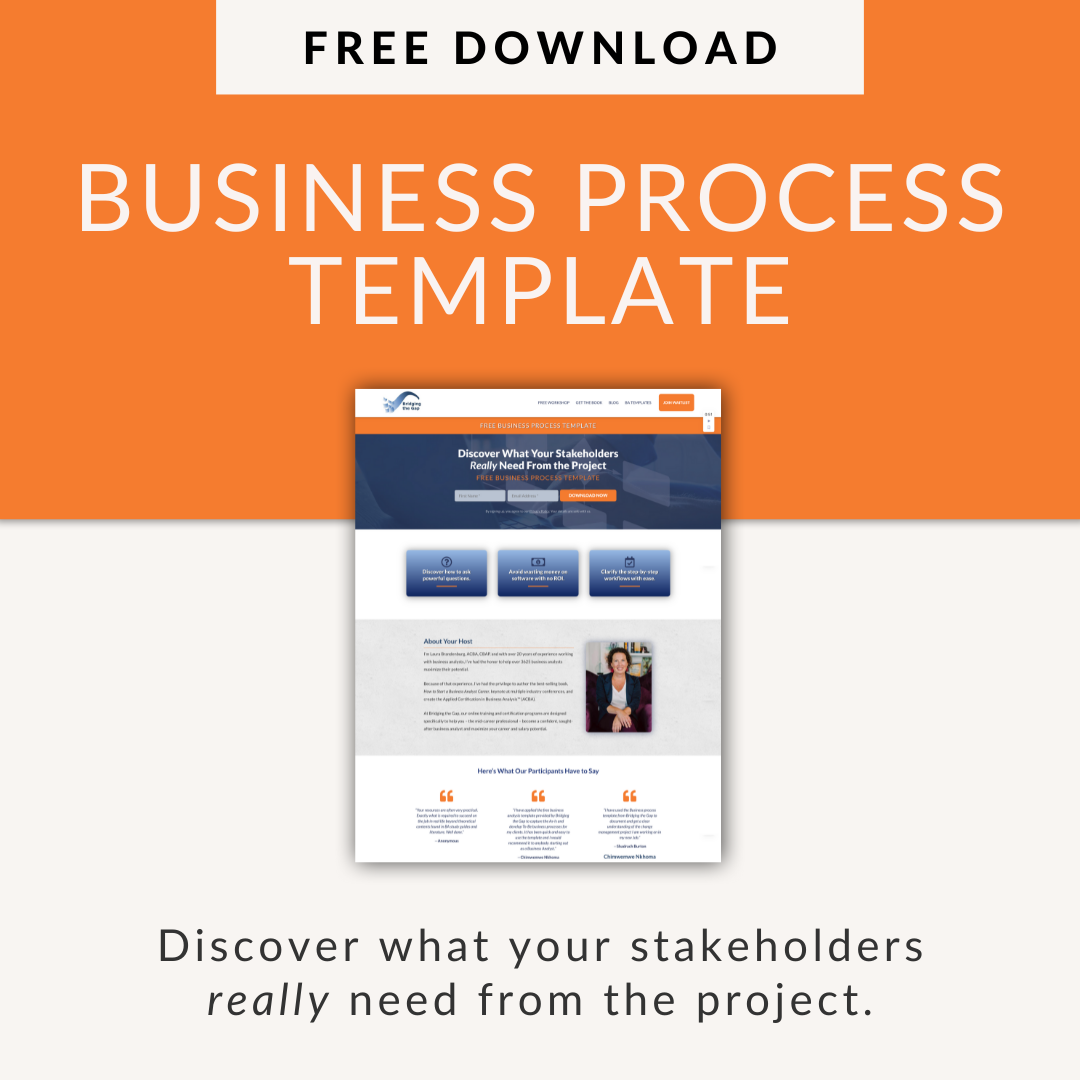
Process analysis is often the first thing I do on a new project, and I mean genuinely the first thing, before requirements workshops, before stakeholder interviews, before anything. Understanding the current-state process tells you what you are actually dealing with. The Bridging the Gap Business Process Template gives you a starting structure for capturing and communicating that process view.
- Start with current state, not future state: The template supports both, but in my experience, jumping straight to future state before the current state is properly documented is one of the most common mistakes on transformation projects.
- Use it as a stakeholder alignment tool: A completed process template is something you can put in front of a stakeholder and ask them to validate. That validation conversation surfaces disagreements early, which is exactly where you want them.
- Adapt the template to your notation: The template is a starting point, not a constraint. Whether you are working in swim-lane diagrams, simple flowcharts, or narrative descriptions, the underlying structure applies.
The business process documentation template article on this site walks through how to adapt a process template for different project contexts if you want to go further with this.
4. Use Case Template
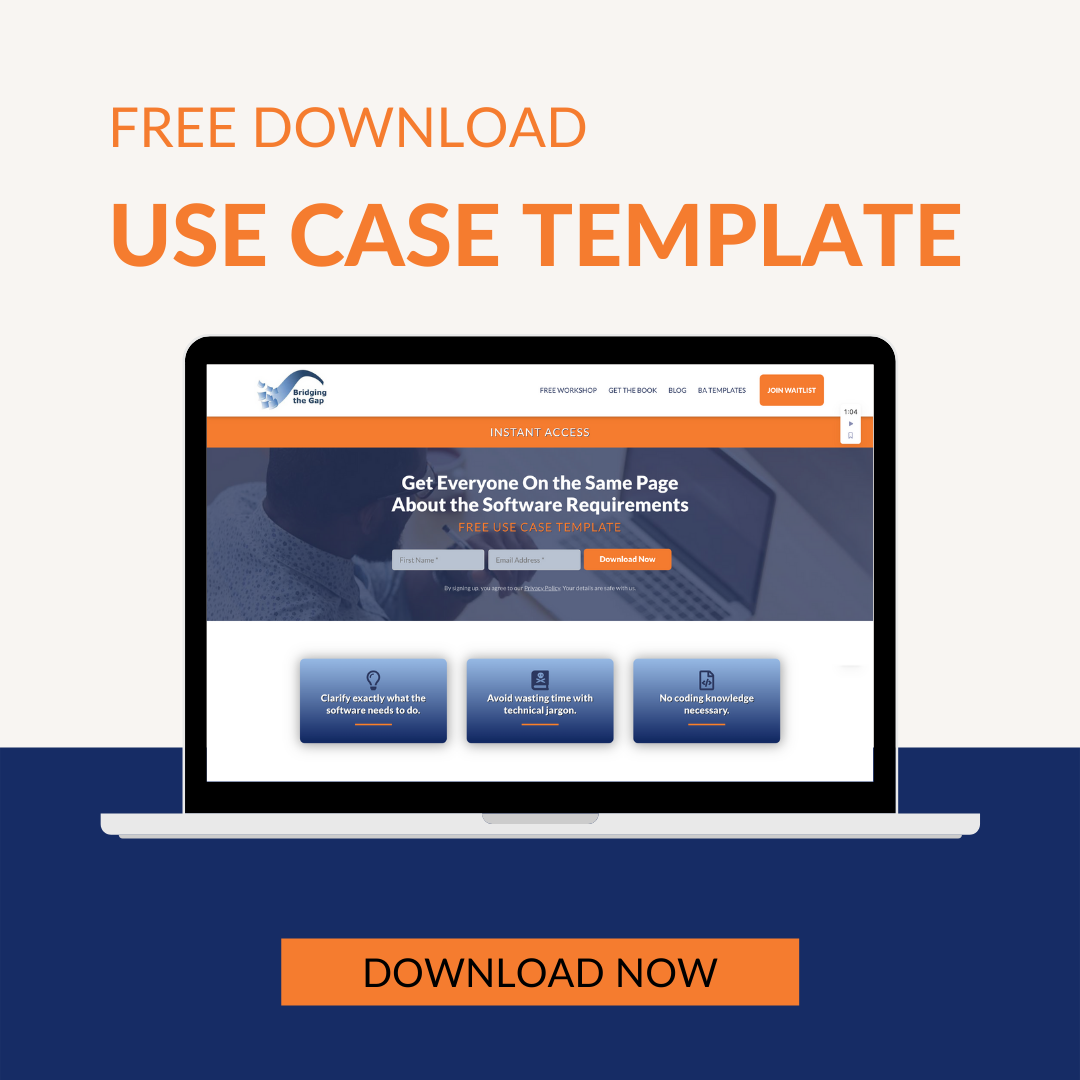
Use cases are one of those techniques that look simple from the outside and turn out to be surprisingly difficult to do well under real project conditions. The Bridging the Gap Use Case Template helps you structure a use case correctly, capturing actors, triggers, main flows, alternate flows, and preconditions in a format that non-technical stakeholders can actually read and validate.
What I value about a good use case template is the discipline it imposes on vague requirements. When you force a stakeholder to confirm the main success scenario step by step, you very quickly discover where their mental model of the system diverges from what the development team has understood. That gap is where defects are born. The article on how to write a use case on a real project gives you a practical walk-through if you want to see the technique applied in context.
5. Job Interview Prep Guide
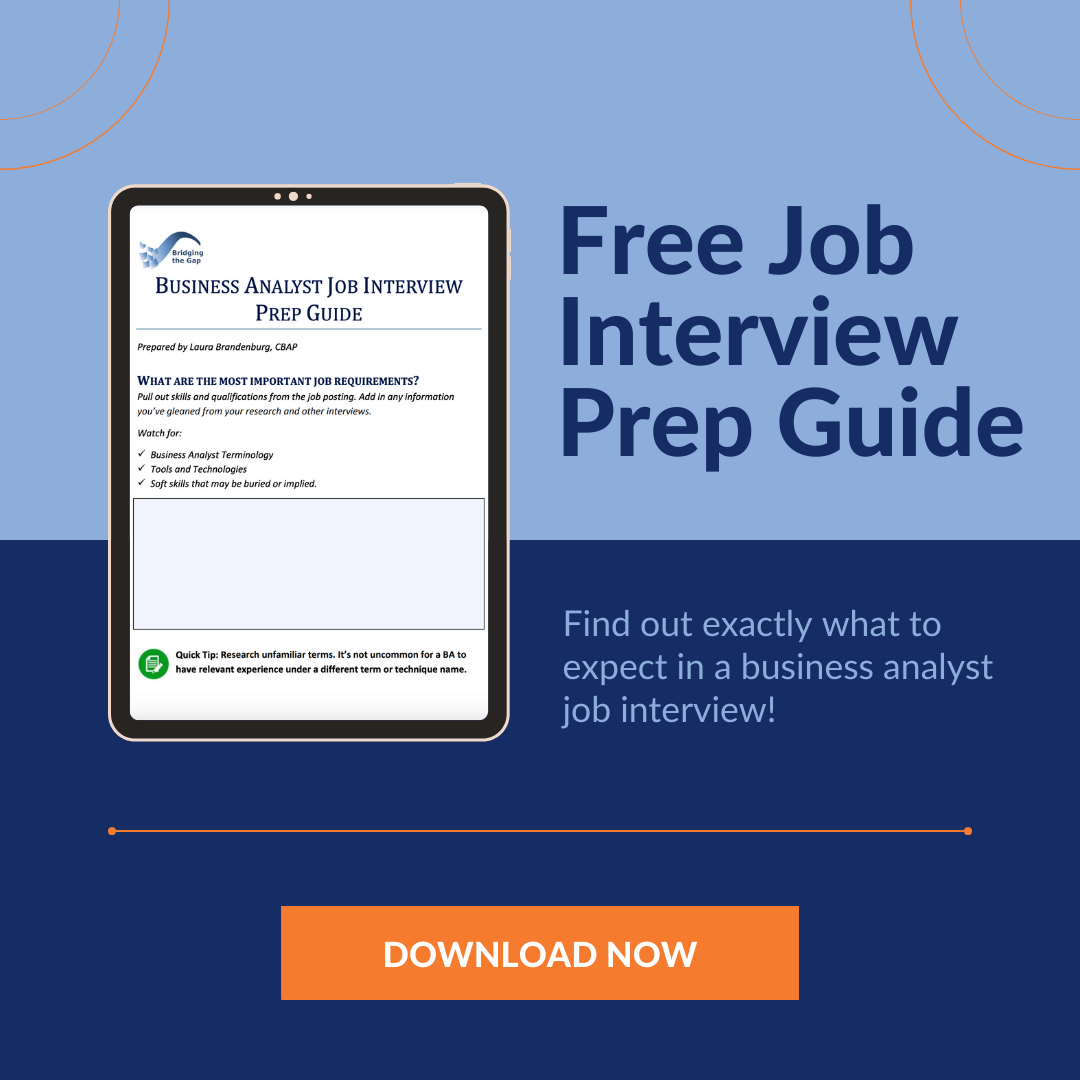
BA job interviews have a particular structure that catches people out if they have not prepared specifically for it. The questions are rarely about what you know in the abstract. They are almost always about how you have handled specific situations: a stakeholder who would not engage, a requirement that kept changing, a project that went off the rails. The Bridging the Gap Interview Prep Guide outlines what to expect and how to prepare structured answers.
- Prepare your stories before the interview, not during it: The guide encourages you to build a bank of specific examples from your own experience that you can draw on under pressure. This is the most important interview preparation you can do.
- Know the difference between BA and PM interview questions: Many candidates blur these roles when answering, which signals to interviewers that they are not clear on the BA remit. The guide helps you stay in lane.
- Practice out loud: Reading through your preparation is not enough. Saying your answers out loud, ideally to another person, is what makes them land clearly under interview conditions.
If you are actively preparing for a BA interview right now, the article on business analyst confidence in interviews and stakeholder talks is worth reading alongside this resource.
6. Quick Start Workshop
The Quick Start to Success workshop from Bridging the Gap is aimed at people who are either new to business analysis or seriously considering it as a career. It covers the landscape of BA opportunities, the kinds of work BAs do across different industries, and how to orient yourself toward the field. If you are already mid-career as a BA, this is probably not your primary resource. But if you are in the first year of the role or still deciding whether BA is the right direction, it is a genuinely useful grounding.
The workshop format means you engage with the material rather than just reading it, which makes a difference to retention. In my experience, the people who benefit most from introductory workshops are those who come with a specific question already formed, rather than a general sense that they want to know more. Go in with something concrete you are trying to figure out, and the workshop will give you much more back.
How to Use These Resources Together
The most effective way to use these six business analysis resources is not to work through them sequentially from top to bottom. Start with the Skills Assessment to identify your gaps. Then pull the specific resources that address those gaps. If your gap is in elicitation, go to the Requirements Discovery Checklist. If it is in process analysis, use the Business Process Template. If it is in software requirements, work through the Use Case Template. The Interview Prep Guide and Quick Start Workshop are situation-specific: use them when those situations apply to you.
If you want to continue building out your development plan beyond these six resources, the free business analysis e-books and training resources page is a natural next step, with a broader range of materials covering additional technique areas.
The honest truth about free resources is that they cannot do the work for you, but the right ones, used at the right moment in your development, remove the guesswork about what to focus on next. The Skills Assessment tells you where your gaps are. The templates give you something to practice with on live work. The interview guide gives you a framework to shape your experience into something you can articulate under pressure. Used together, these six resources give you a practical foundation to build on, and that is worth considerably more than their $0 price tag.
Frequently asked questions
What are the best free business analysis resources for beginners?
The Bridging the Gap BA Skills Assessment is the best starting point because it tells you where your gaps actually are before you invest time in anything else. From there, the Requirements Discovery Checklist and Business Process Template give you practical tools you can apply immediately on real work. The Quick Start Workshop is also worth completing if you are in your first year in the role.
How do I know which business analysis resources are right for my level?
Start with a skills assessment before choosing any resource, because the right material depends entirely on where your gaps are rather than how long you have been in the role. Someone with five years of experience can have significant gaps in specific techniques, just as someone new to the role might already be strong in areas like process analysis. Let the assessment guide the choice rather than your job title or years of service.
Are Bridging the Gap resources genuinely free?
Yes, the six resources covered in this article, the BA Skills Assessment, Requirements Discovery Checklist, Business Process Template, Use Case Template, Job Interview Prep Guide, and Quick Start Workshop, are all free to access with no payment required. Some may require an email registration to access the download or workshop link.
What is a requirements discovery checklist used for in business analysis?
A requirements discovery checklist is a preparation tool you use before stakeholder sessions to make sure you have covered the right questions across all relevant areas of scope. It helps you avoid the common problem of gathering opinions rather than actual requirements. It is particularly useful on projects where stakeholder access is limited and you need to make the most of every session.
How do I prepare for a business analyst job interview?
The most effective preparation is building a bank of specific examples from your own work that demonstrate how you have handled real BA challenges, such as a stakeholder who pushed back, a requirement that changed late, or a project with conflicting priorities. Practice delivering those examples out loud before the interview. A structured guide like the Bridging the Gap Interview Prep Guide helps you understand the format of BA-specific interview questions so you can prepare the right kind of stories.
Try Ash, Your Virtual BA
You have just read through six resources designed to sharpen your BA skills and give you practical tools for real work. Ash, the virtual BA assistant on this site, is built on the same practical foundation. Whether you want to test your understanding of a BA term, talk through a requirements problem you are working on right now, or explore the glossary of techniques covered in the Skills Assessment, Ash can help you apply that knowledge immediately rather than leaving it as theory. Try Ash Virtual BA and put what you have just read into practice.
Further reading
- Business Analysis Foundational Concepts | Business Analysis Techniques
- Business Analysis | The Global Standard | IIBA®
Written by Sam Cordes, founder of the Business Analyst’s Toolkit.